

What Is Nitriding Treatment?
Nitriding is a thermochemical surface-hardening process that diffuses nitrogen into steel to develop a hard surface layer. Unlike electroplating, it modifies the substrate rather than simply depositing a separate coating. Gas nitriding and plasma (ion) nitriding are common routes. The result depends on the steel grade, its prior heat treatment and the selected process.
For CNC-machined components, nitriding can be useful where wear resistance and surface durability are important. Gas nitriding commonly operates around 520°C, with the actual cycle selected for the material and specification. Nitriding normally requires no subsequent hardening quench. Nitrocarburising is a related process that introduces carbon as well as nitrogen; the two should not be substituted without approval.
Key Properties and Design Considerations
Nitriding can improve surface hardness, resistance to scuffing and fatigue performance. Steels containing nitride-forming elements such as chromium, molybdenum, vanadium or aluminium are particularly suitable. Low distortion does not mean zero dimensional change: growth and residual-stress movement can affect precision fits. Specify the required case depth and compound-layer condition rather than hardness alone. Corrosion performance depends on the material and process and should be reviewed separately, especially for stainless steel.
Example One: Nitrided Shafts and Gears
Shafts, gears and cam components are common candidates for nitriding when their surfaces face repeated contact or sliding. The treatment can improve wear resistance while retaining the properties established in the core by prior heat treatment. Identify working surfaces, bearing seats and critical fits on the drawing. Required case depth should reflect the loading and part design rather than a generic treatment callout.
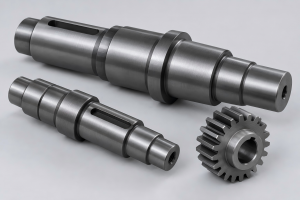
Figure 1. Illustrative shafts and gear for nitriding applications. AI-generated image, not a completed customer project.
Example Two: Nitrided Mould and Die Components
Selected mould inserts, dies and ejector components may benefit from a wear-resistant nitrided surface. Suitability depends on the tool steel, working temperature and contact conditions. Review sharp edges and the allowable compound layer, since a brittle surface layer can be unsuitable for some tooling applications. Any polishing or finishing after treatment must be planned so it does not remove the required hardened layer.
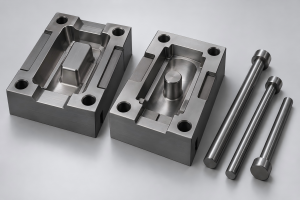
Figure 2. Illustrative mould inserts and ejector pins. AI-generated image, not a validated tooling assembly.
Example Three: Nitrided Guide Pins and Bushings
Steel guide pins, sleeves and bushings may be considered for nitriding in mechanisms with repeated sliding contact. Define the final mating clearance, surface roughness and lubrication conditions before selecting the treatment. Masking may be needed where specific areas must remain untreated. Appearance alone cannot verify hardness or case depth; acceptance should rely on agreed inspection results.
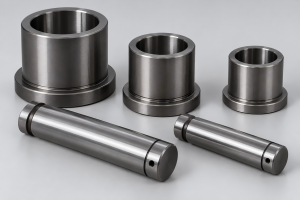
Figure 3. Illustrative steel guide pins and bushings. AI-generated image; surface appearance does not verify nitriding quality.
What to Consider When CNC Machining Parts for Nitriding
Plan machining and heat treatment together. Establish the required core condition first, assess the need for stress relief, and complete most machining before nitriding. The treatment temperature must be compatible with the previous tempering or ageing cycle. Remove burrs, contamination and unsuitable EDM-affected layers before treatment. Agree any finishing allowance in advance and inspect critical dimensions afterwards. Hardness, case depth and compound-layer checks may require representative test coupons and a defined sampling plan.
What to Send for an Engineering Review
Please provide the current 2D drawing and 3D model, steel grade, prior heat-treatment condition, quantity, and required nitriding process or specification. State surface hardness with its test method and load, case depth with its definition, compound-layer limits, treated and masked areas, final tolerances and surface finish. Include operating loads, mating-part details and any required treatment certificates or inspection reports. These inputs help resolve process questions before quotation and production.
Discuss Your Nitrided Component with K-TEK
K-TEK provides custom CNC milling, turning and dimensional inspection for industrial components. To discuss a machined part requiring nitriding, send your drawings and treatment requirements to k-teksales8@ktekpart.com. Material suitability, process availability, final tolerances and inspection documentation should be reviewed for the specific project before an order is placed.
Author Information
Writer: Caylin | Date: November 2, 2026
Email: k-teksales8@ktekpart.com | Web: www.k-tekmachining.com
Technical references: Bodycote, Gas nitriding and Plasma nitriding; NASA PRC-2004 Rev. D, Process Specification for Ion Nitriding. General background only; the agreed drawing and process specification govern acceptance.
Post time: Nov-02-2026


