


The aerospace industry represents one of the highest levels of engineering and manufacturing technology. Aircraft and spacecraft systems rely heavily on high-precision aerospace components to ensure safety, reliability, and performance under extreme operating conditions.
As the aviation industry continues to grow, aerospace parts machining has become an important topic in modern manufacturing. The accuracy and quality of machined aerospace components directly affect flight safety, which means the manufacturing process must meet extremely strict standards. However, due to complex materials, demanding precision requirements, and complicated manufacturing processes, aerospace machining remains one of the most challenging areas in precision manufacturing.
Key Materials Used in Aerospace Parts Machining
Aerospace components are manufactured using specialized materials that provide high strength, low weight, corrosion resistance, and excellent thermal stability. These materials allow aircraft to operate safely in extreme environments, but they also increase machining difficulty.
High-Strength Aluminum Alloys
High-strength aluminum alloys are widely used in aircraft structural components because of their light weight, good corrosion resistance, and excellent strength-to-weight ratio. For example, 7075 aluminum alloy is commonly used in aerospace structures due to its durability and machinability.
Titanium Alloys
Titanium alloys are among the most important aerospace materials. They offer exceptional strength, low density, and outstanding corrosion resistance. However, titanium is difficult to machine because it has low thermal conductivity and a tendency to bond with cutting tools, which can accelerate tool wear and reduce machining efficiency.
High-Temperature Alloys
Nickel-based superalloys are used in aircraft engines, turbine blades, and combustion systems because they maintain their strength at extremely high temperatures. Their hardness and heat resistance make them challenging to cut, often requiring specialized tooling and machining strategies.
Composite Materials
Advanced composite materials, such as carbon fiber reinforced polymers (CFRP), are increasingly used in aerospace structures. They help reduce weight while maintaining high structural strength. However, machining composites requires careful techniques to prevent delamination and fiber damage.

Process Requirements for Aerospace Machining
Manufacturing aerospace components requires extremely precise machining technologies to ensure performance and reliability.
Advanced CNC Machining
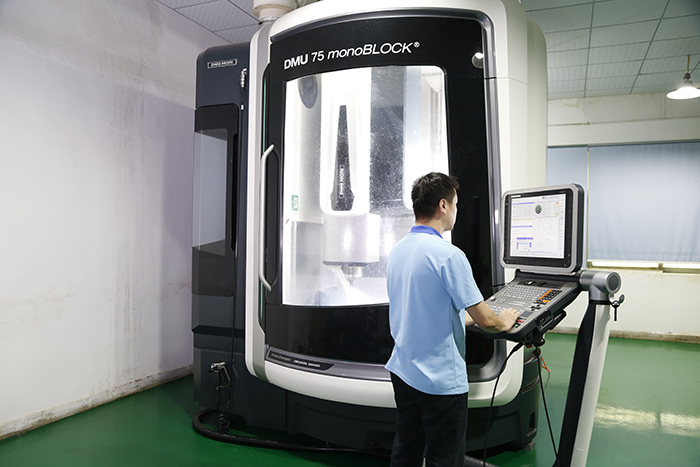
CNC machining centers play a critical role in aerospace manufacturing. They allow precise control of operations such as:
-
CNC milling
-
CNC turning
-
Drilling
-
Multi-axis machining
These technologies make it possible to produce parts with tight tolerances and complex geometries.
Additional Manufacturing Processes
In addition to CNC machining, aerospace parts often require multiple additional processes, including:
-
Heat treatment
-
Welding and riveting
-
Surface finishing
-
Precision grinding
Each of these processes must be carefully controlled to maintain strength, wear resistance, heat resistance, and dimensional stability.

Major Challenges in Aerospace Parts Machining
Aerospace machining involves several technical challenges due to the strict requirements of the industry.
Machining Difficult Materials
Materials such as titanium alloys and nickel-based superalloys are extremely strong and heat-resistant. While these properties are ideal for aerospace applications, they also lead to rapid tool wear, high cutting temperatures, and complex machining conditions.
Complex Geometries
Aerospace components often feature complex shapes, thin walls, deep cavities, and intricate structures. These designs require advanced multi-axis machining technologies and experienced engineers to achieve the required precision.
Large Structural Components
Many aerospace parts are large structural components, such as aircraft frames or engine casings. Manufacturing these parts requires large CNC machines and specialized fixtures to ensure accuracy and stability during machining.
Strict Quality Control
The aerospace industry maintains extremely high standards for quality. Every component must undergo rigorous inspection procedures, including:
-
Dimensional inspection
-
Surface quality testing
-
Non-destructive testing (NDT)
This ensures that every part meets the required safety and performance standards.

Surface Finish and Precision Requirements

Surface quality is another critical factor in aerospace manufacturing. Components must meet strict requirements for surface roughness, cleanliness, and dimensional accuracy.
Traditional manual polishing methods are no longer sufficient for aerospace parts. Instead, manufacturers rely on precision machining, automated polishing technologies, and advanced surface treatment processes to achieve the required finish.
Conclusion
Aerospace parts machining requires an in-depth understanding of materials, manufacturing processes, and precision engineering. From machining difficult alloys to achieving tight tolerances and maintaining strict quality control, every stage of production must be carefully managed.
For aerospace manufacturers, working with an experienced precision machining partner is essential. Skilled engineers, advanced CNC equipment, and strict quality control systems are all critical to producing reliable aerospace components and ensuring the safety of modern aircraft and spacecraft.

Post time: Mar-11-2026


